🌊 The Haenyeo of Jeju: women of the sea 🐚
There's a sound, on the Jeju coast, that precedes every image: the sumbisori, the high-pitched whistle the Haenyeo emit as they surface after a breath-hold. It's the breath released after holding it in the depths for minutes, the most authentic sign of a profession passed down for centuries.
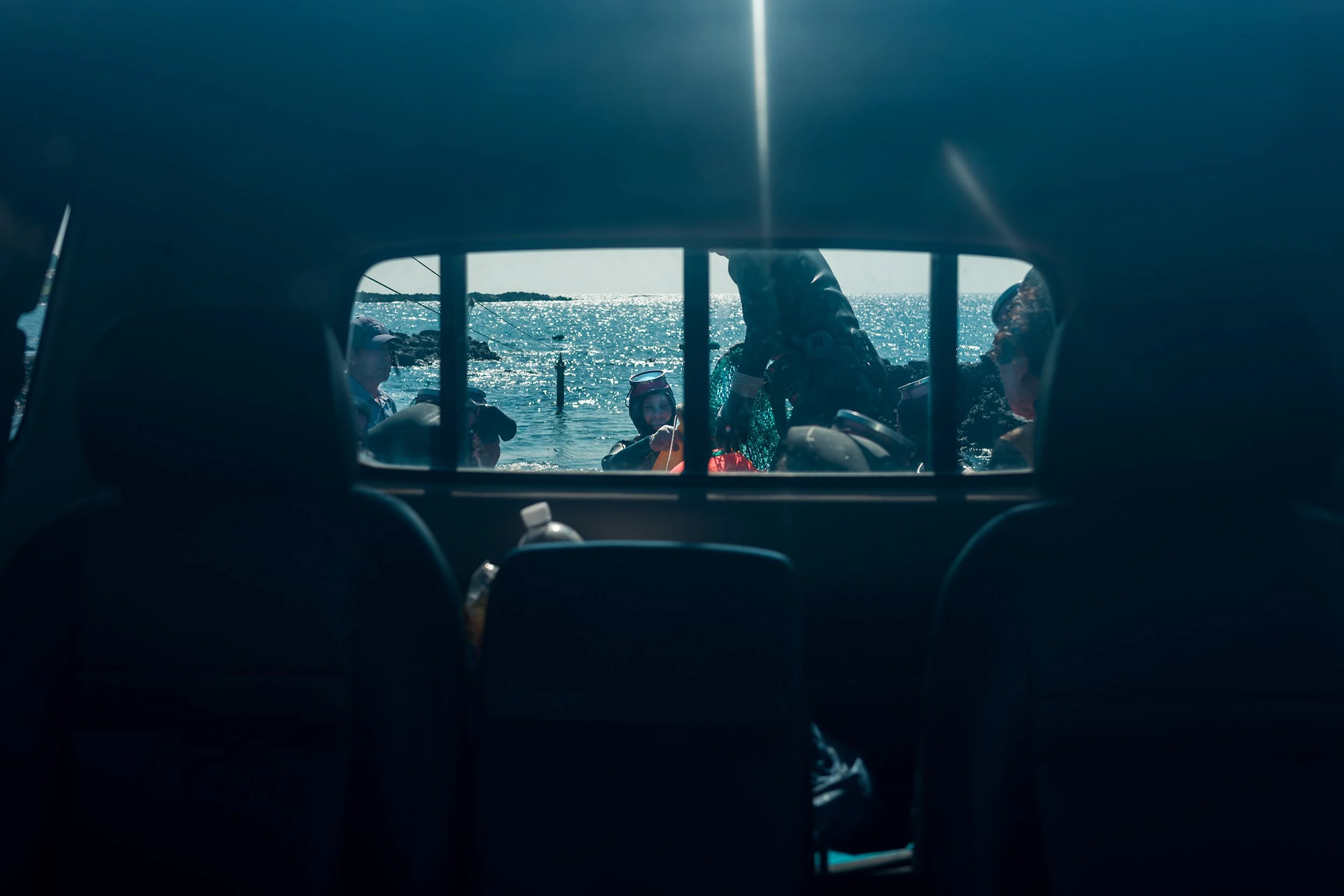
Finding them wasn't easy. I'm not talking about the shows put on for tourists, but the real women who brave the ocean every day for a living. After days of searching, I was fortunate enough to obtain their permission; a rare gift, as they don't like being photographed. The encounter took place at midday, under flat, harsh light: a nightmare for photography. But there's no arguing with the sea, not with their rhythm, nor with an occasion like this.
The Haenyeo are traditional freedivers from Jeju Island, South Korea. For generations, they have dived without tanks, holding their breath for over two minutes and reaching depths of 20 meters to collect seaweed, abalone, and shellfish. Many are over 60, some 80: today, they represent one of the oldest working communities in the world, and their numbers have dwindled dramatically; from over 20,000 in the 1960s to just a few thousand today.
They are mothers, daughters, sisters. They are symbols of resilience, independence, and female solidarity in a society that for centuries has seen them as marginalized.
They have supported their families through hard, silent labor, in waters that drop to 10 degrees Celsius in winter. In 2016, UNESCO recognized their culture as an Intangible Heritage of Humanity, celebrating its transmission between generations and sustainable fishing practices.
The Haenyeo don't conquer the sea: they respect it. Each village cooperative establishes precise rules regarding areas, species, and harvesting seasons; the women themselves help protect the ecosystem by releasing young specimens and taking only what is needed.
Today, this age-old tradition is at risk of disappearing: warming seas, coastal pollution, and the lack of new generations willing to take up the baton threaten a profession that has endured centuries of Korean history. Photographing them means trying to freeze, for a moment, a world that is slowly disappearing with the ebb and flow of the tide.