

The Taliban, between control and devotion
In Afghanistan, faith is not mere devotion, but a foundation that unites social life with power itself.
The Taliban, exponents of a rigorous vision of Islam, proclaim themselves the guardians of the country and its holy sites, simultaneously blending political authority and spiritual conviction. They guard mosques, preserve historical sites from the population's neglect, and dictate every aspect of society.
This intertwining of religious belief and dictatorial power creates a reality in which the protection of heritage and the country becomes both a spiritual mission and a means of control.
FULL STORY
In Afghanistan, faith is not mere devotion: it is the foundation upon which social life, identity, and political authority intertwine.
The movement known as the Taliban (the term itself refers to scholars of Islamic sciences) originated in the early 1990s, emerging from religious schools (madrasas) in southern Afghanistan and Pakistan during the civil war. They conquered Kabul in 1996 and established a theocratic regime based on a strict interpretation of Islamic law. After the withdrawal of foreign forces in 2021, the Taliban regained control of Afghanistan, proclaiming themselves the guardians of the country and its sacred heritage. Today, under their rule, religion simultaneously serves as a spiritual compass, a legal system, and a tool of control. The Taliban's ideology demands that Islam (as they interpret it) determine every aspect of daily life, rejecting the secular republican government as morally corrupt and un-Islamic. Their worldview is based on historical discourses that elevate religious authority above all man-made laws.
For many Afghans, daily life is structured around Sunni Islam, the country's dominant religious tradition. But according to the Taliban's version of Islamic law, only one strict interpretation is allowed: dissenting religious practices, celebrations, and minority rituals are suppressed or banned. Traditions such as Nowruz, an ancient celebration of spring and renewal, have been declared "un-Islamic" and prohibited.
This ideological framework extends to the legal and social apparatus of the state. Punishments, restrictions on personal freedoms, and daily conduct are justified as religious obligations. The religious police (the Ministry for the Propagation of Virtue and Prevention of Vice) enforces dress codes, behavioral norms, and attendance at prayers; current policies even criminalize non-attendance at mandatory daily religious services.
The Taliban leadership embodies this fusion of spiritual and temporal power. The supreme leader, the Amir al-Mu'minin, holds supreme authority over both religious interpretation and state policy, blurring the line between mosque and throne.
Today in Afghanistan, religious devotion and political power are inseparable. Mosques, shrines, and historical sites, always at the center of community life, become symbols of this dual purpose: revered as spiritual centers, but also controlled as instruments of governance and social order. In some cases, the Taliban have engaged in cultural restoration projects, such as the preservation of ancient Buddhist sites and synagogues, revealing a complex and sometimes paradoxical attitude toward cultural heritage. Yet for many Afghans, this intersection of faith and power is experienced as both constraint and condemnation. Civil liberties, especially for women and religious minorities, have drastically eroded under the Taliban regime. Girls are barred from formal secondary education, and religious diversity, including Sufi traditions and non-Sunni communities, faces censorship and persecution.
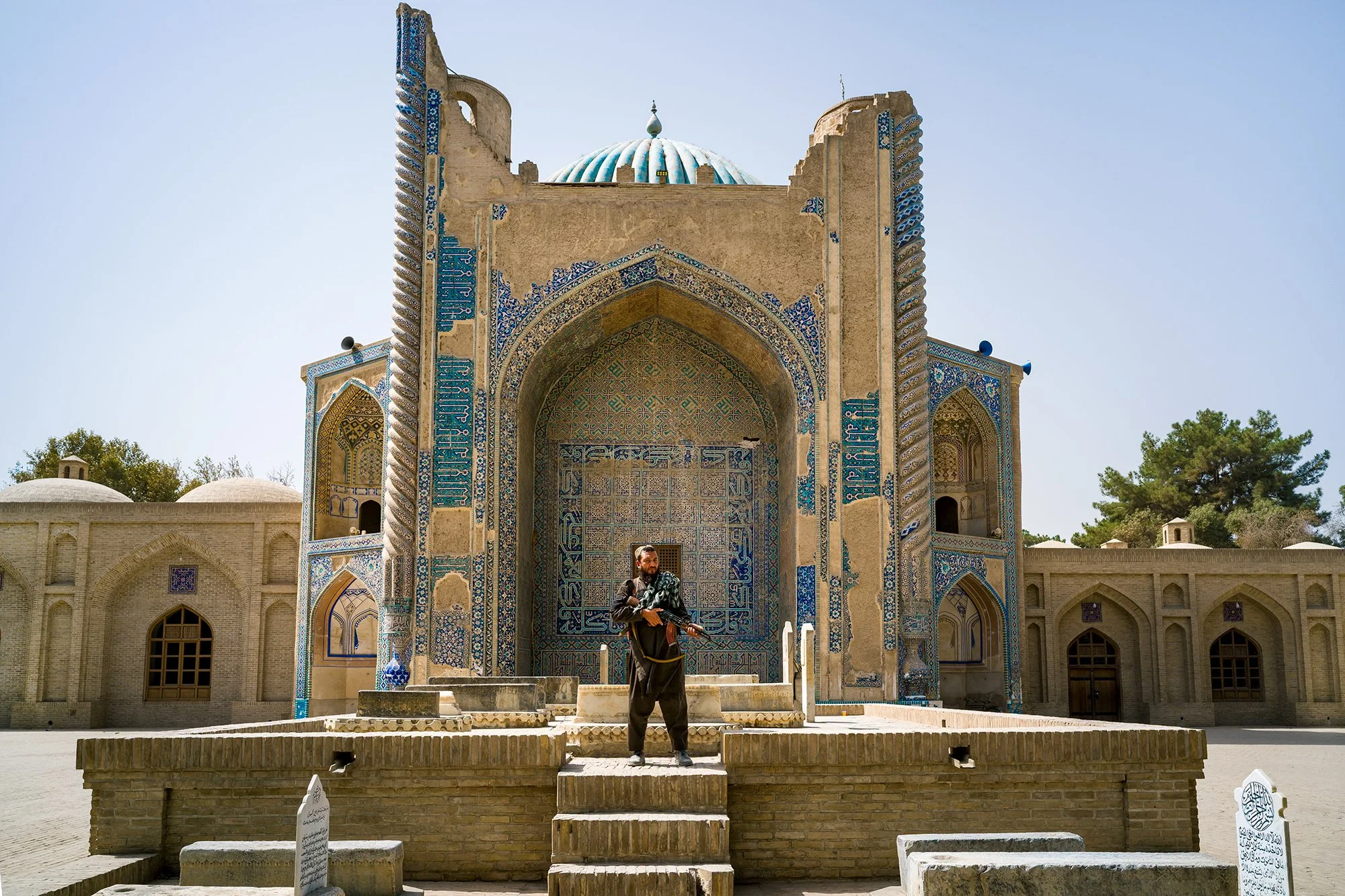
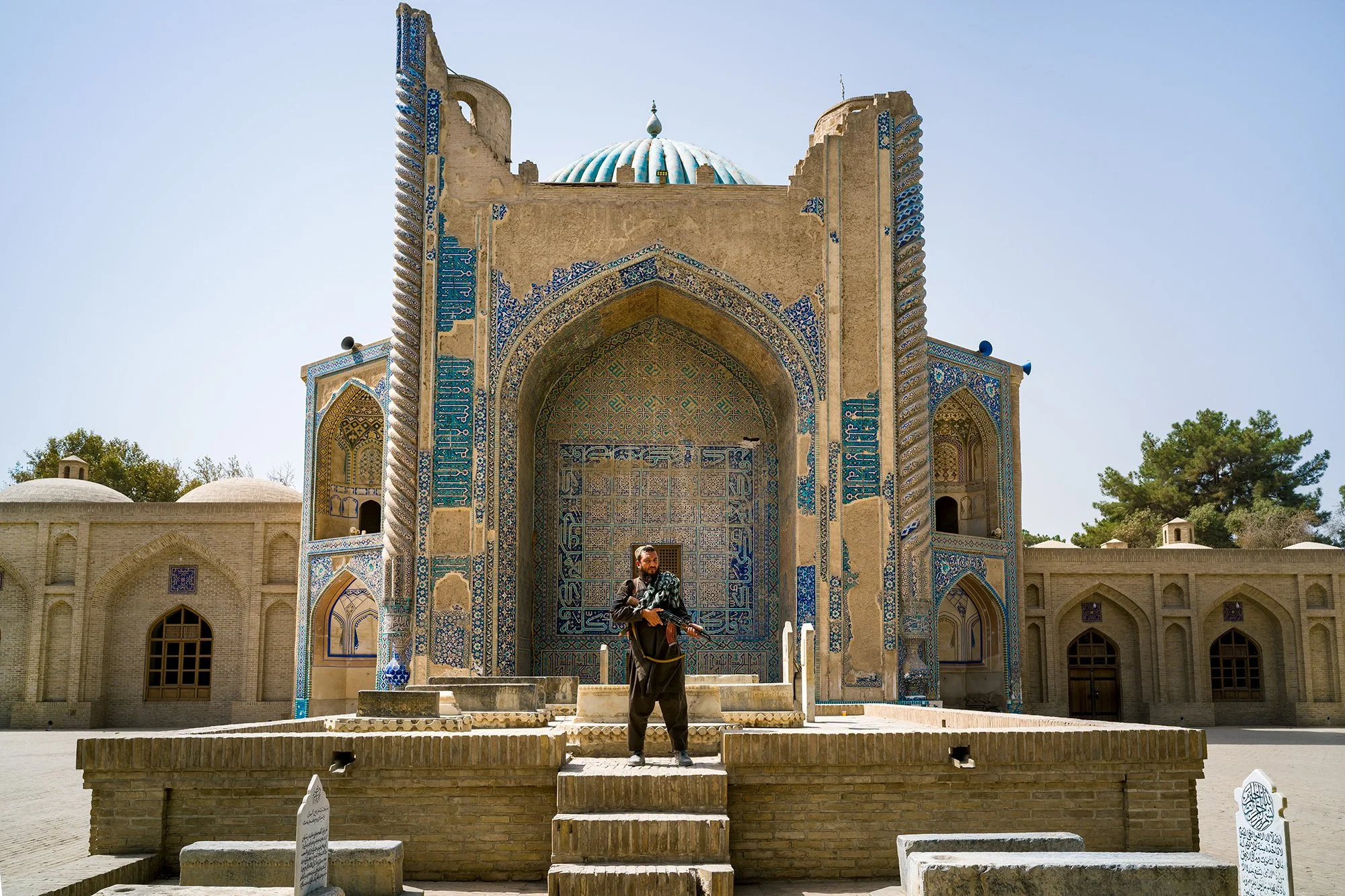
In front of the Green Mosque in Balkh, a sacred site and the spiritual heart of northern Afghanistan, an armed Taliban stands vigil among the ancient tombs of the faithful. Its presence, a symbol of protection and power, reflects the profound and complex connection between faith, heritage, and religious authority in everyday Afghan life.
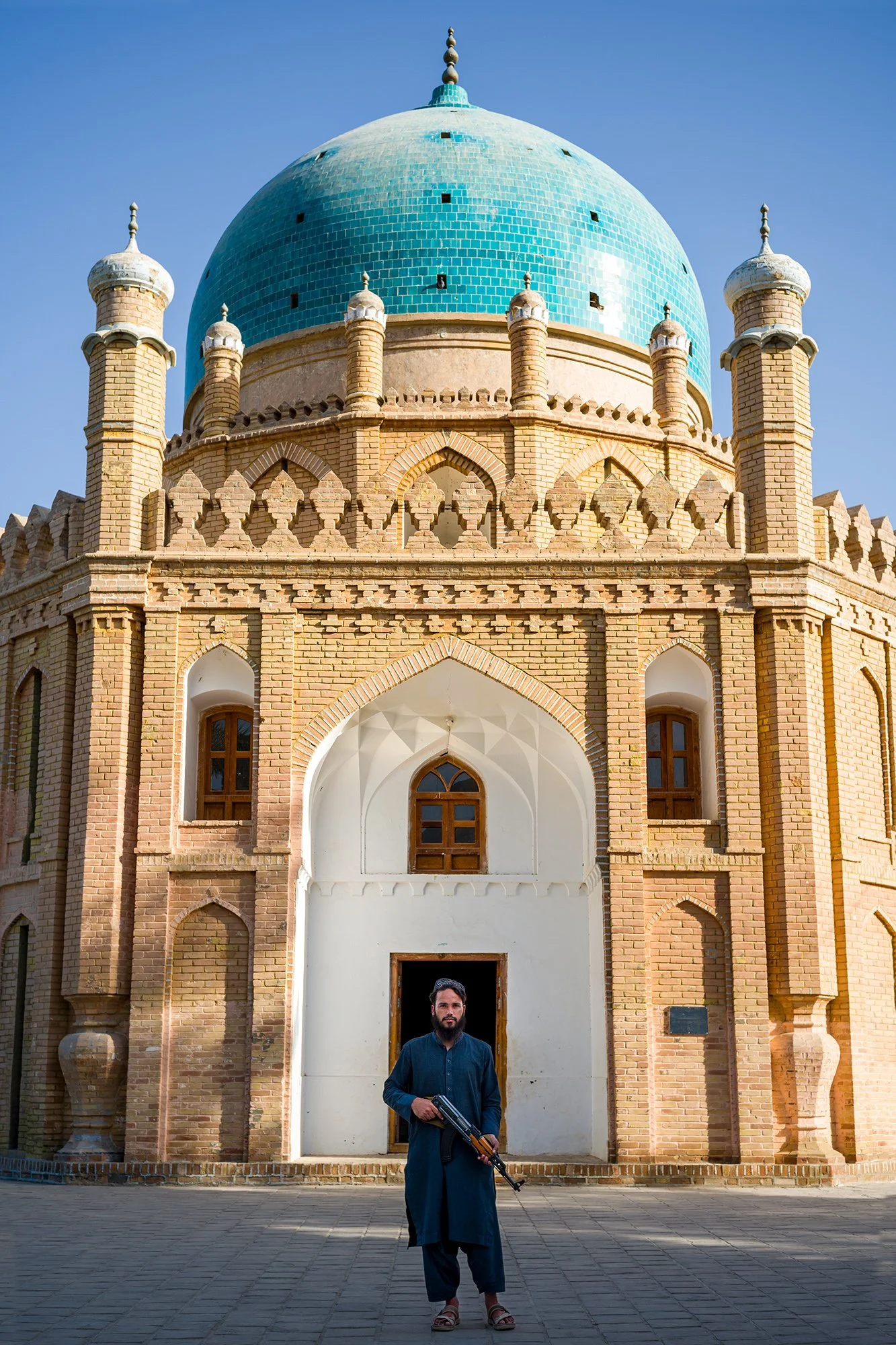
At dawn, in front of the Mausoleum of Mirwais Hotak, a young, armed Taliban man stands proudly and solemnly vigil over this extraordinary sacred site. Dedicated to the celebrated Afghan leader, the mausoleum is a space of devotion, remembrance, and reflection for the local community. The guardian's presence, illuminated by the morning light, embodies the protection of religious heritage and the Taliban's complex role in Afghanistan's cultural and spiritual life.
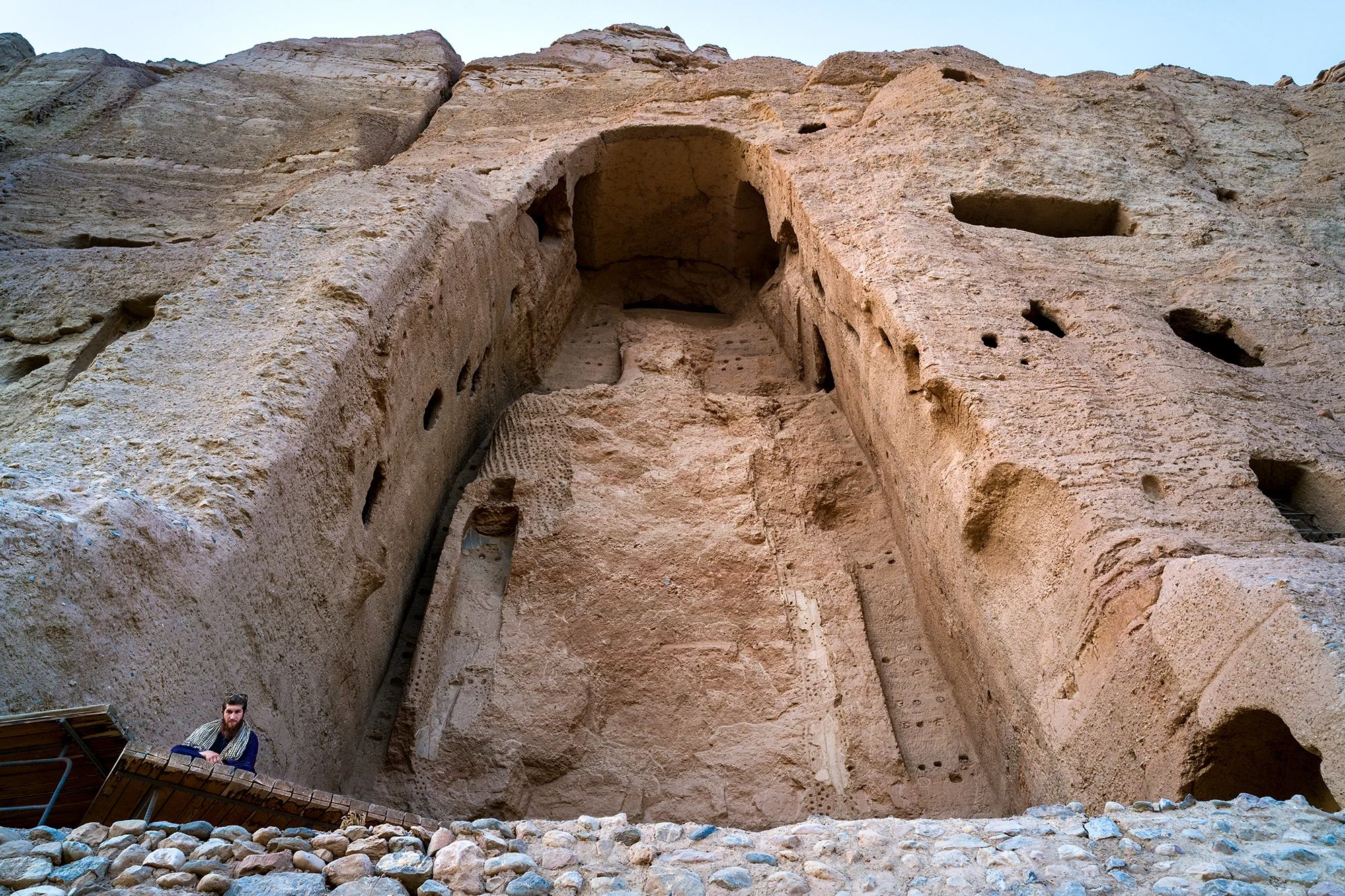
At the foot of the empty niche that once housed one of the Bamiyan Buddhas, a Taliban guard watches over the historic site. In this paradox, between faith and repentance, the guard becomes the symbol of a group torn between the desire to preserve and the memory of what it destroyed.
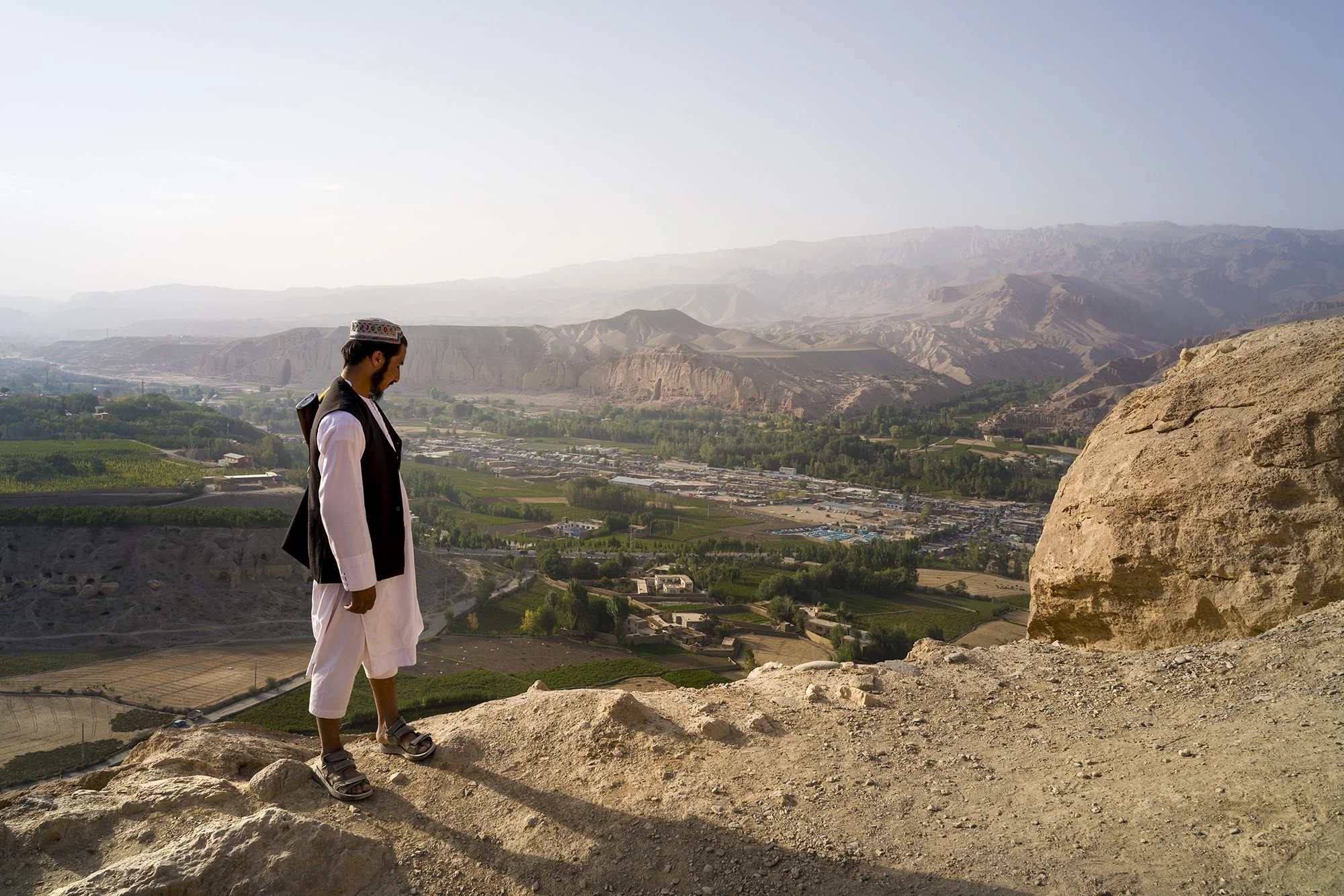
At the edge of the 11th-century fortress of Shahr-e Gholghola, literally "City of Screams," an armed Taliban guard watches over the valley and the path leading to the summit. The ruins overlook the Bamiyan Valley, with the spires in the distance where the colossal stone Buddhas once stood before their destruction in 2001.
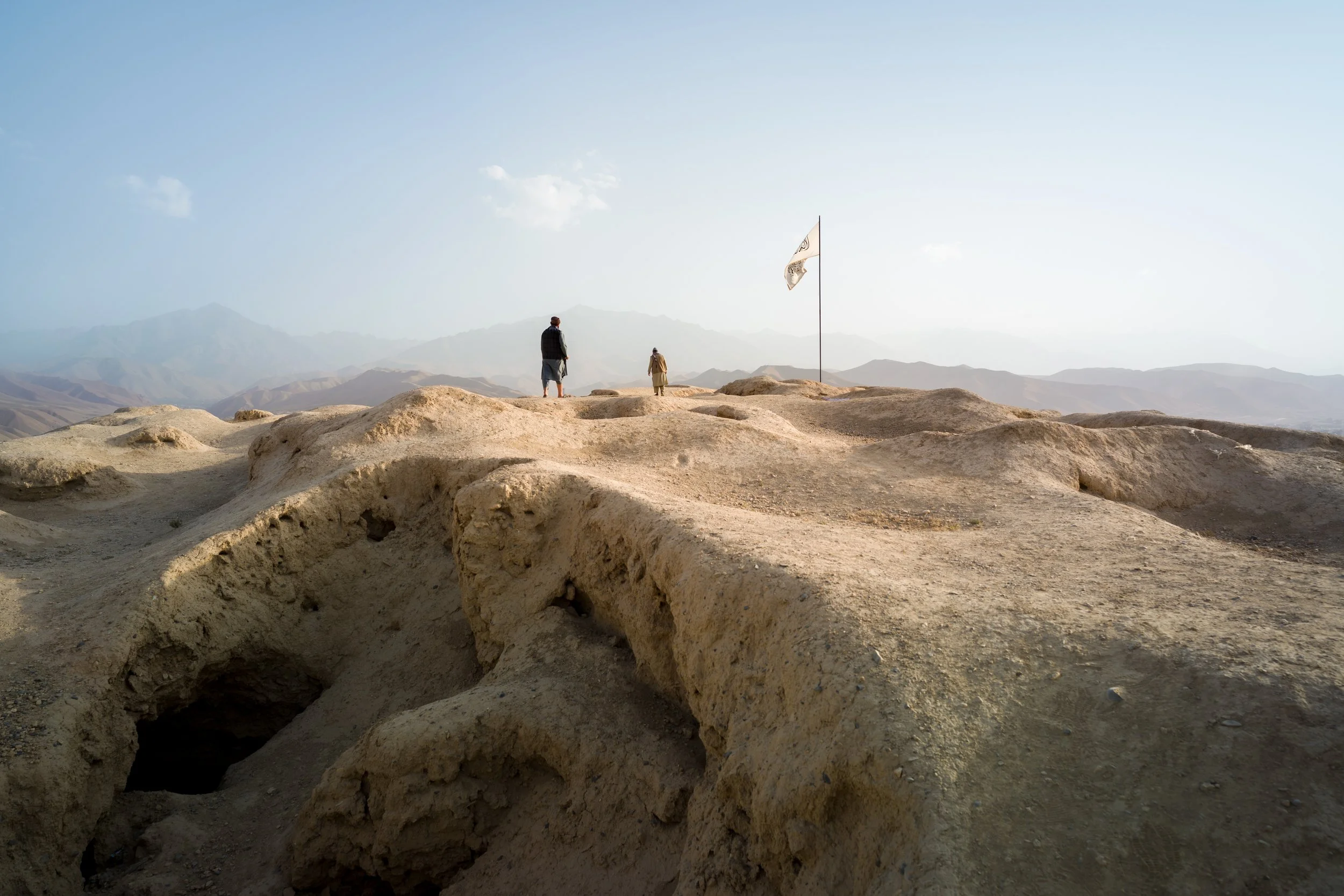
A Taliban flag flutters atop the ruins of Shahr-e Gholghola, where the now-replaced Afghan tricolor once stood. This flag, present in every prominent place in the country, is a symbol of an authority that protects while dominating a land where faith, control, and tradition intertwine, and even the wind, along with it, seems to carry the echo of submission and survival.
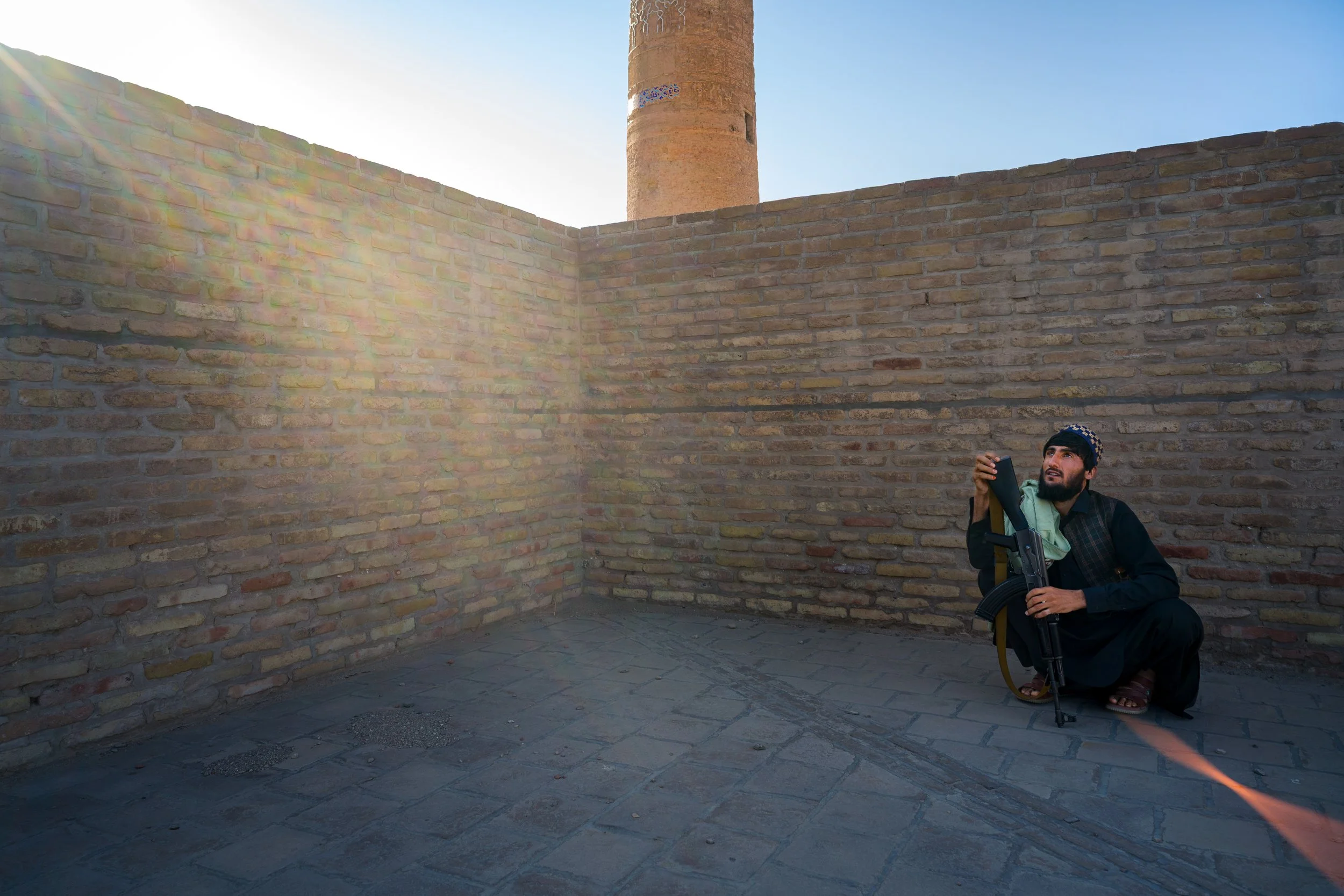
A Taliban guard shelters from the sun within the walls surrounding the city's ancient minarets. His role is to protect the site from abuse and vandalism, safeguarding a legacy of faith and memory for future generations, pending a major restoration.
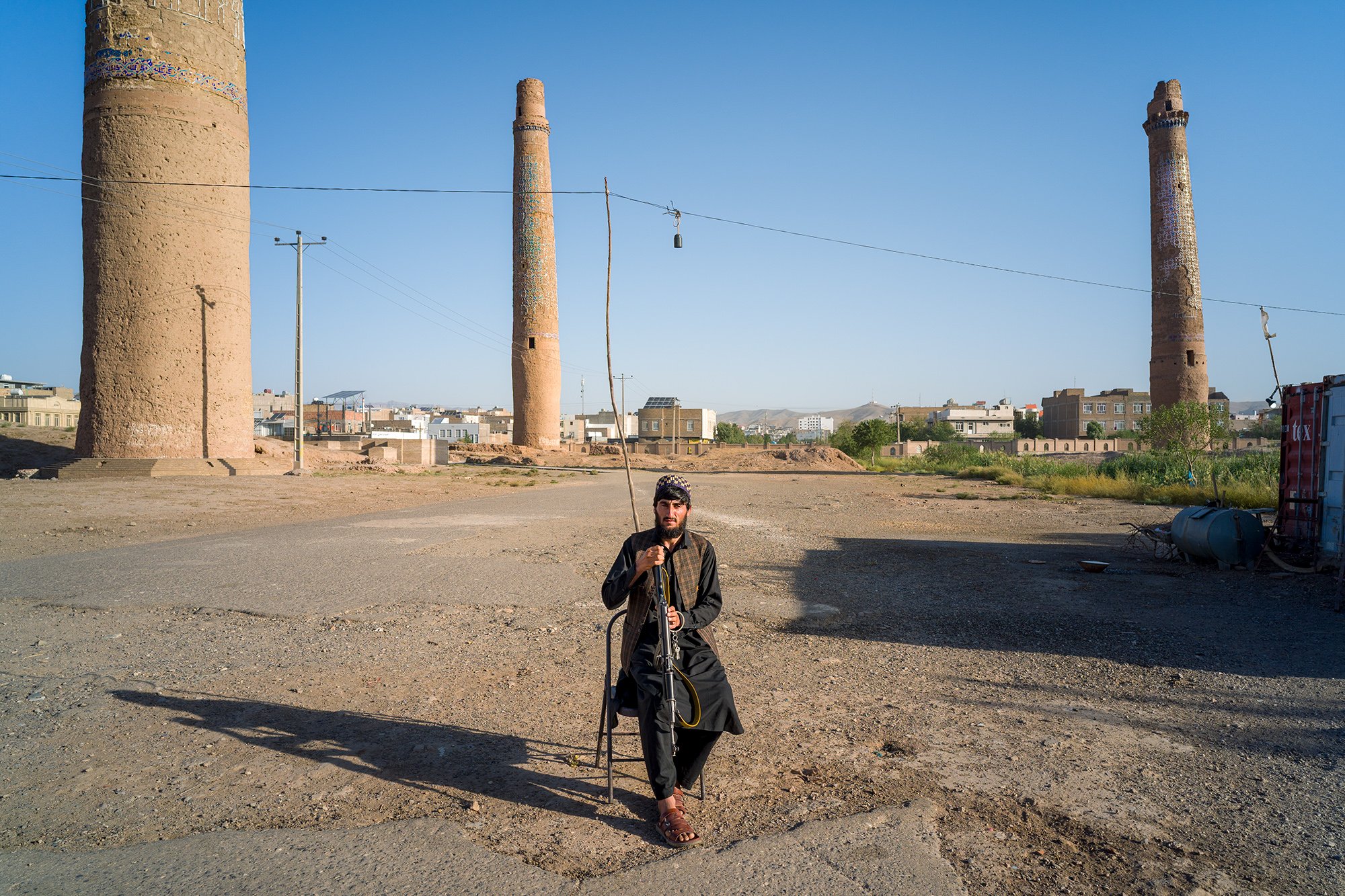
At the center of the fenced square that houses the ancient minarets of Herat, a young, armed Taliban man sits vigilantly in his chair, guardian of a now fragile historical and sacred treasure. His role is to protect the site from abuse and vandalism, safeguarding a legacy of faith and memory for future generations, pending a major restoration.
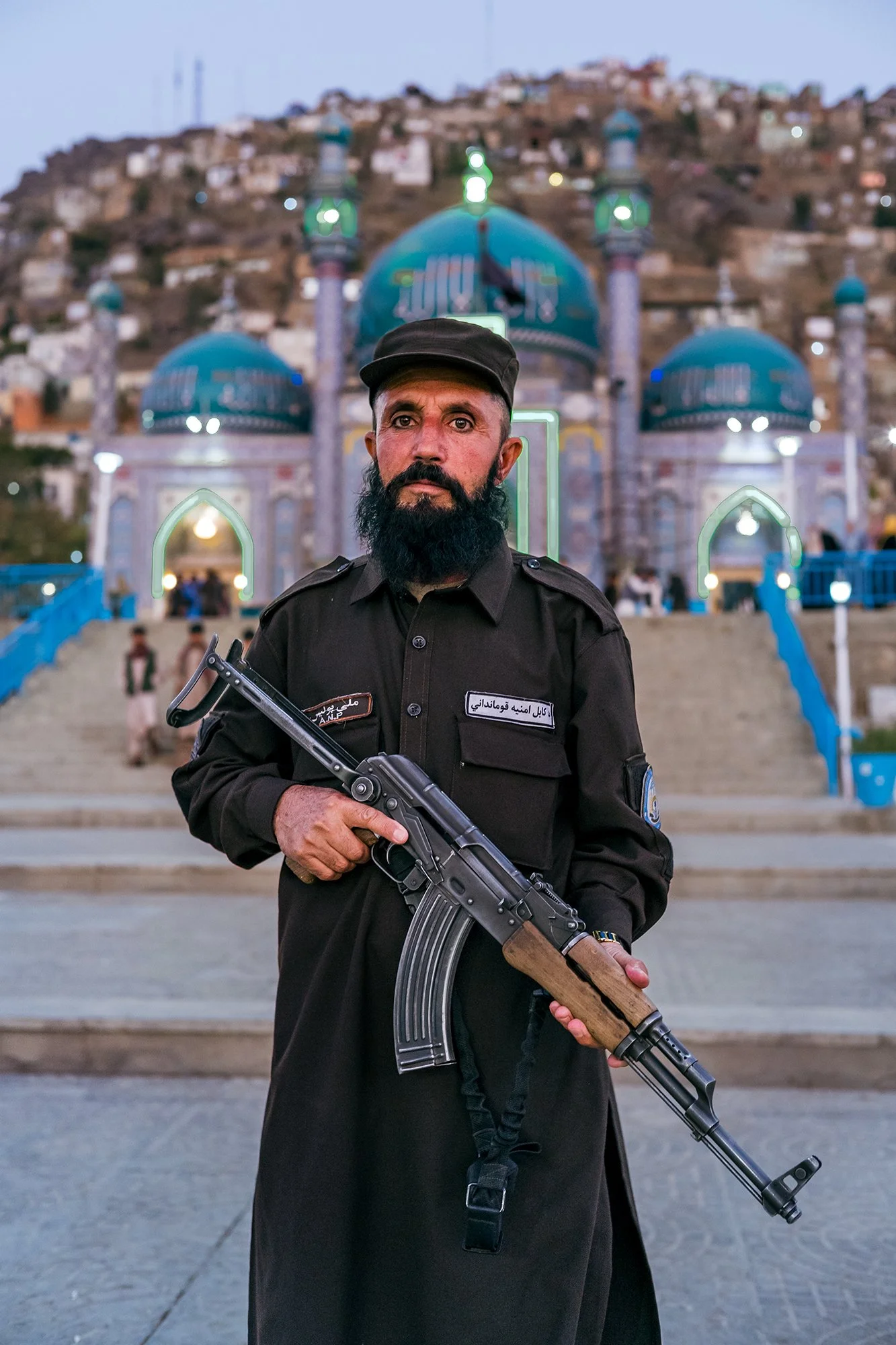
In front of Kabul's magnificent Blue Mosque, a place of daily pilgrimage, an armed Taliban, a former mujahideen who fought to liberate the country from the Russian invasion, poses with solemn pride at sunset in his role as guardian. His presence is intertwined with the protection of sacred sites and the Taliban's role in the cultural and spiritual fabric of Afghanistan.
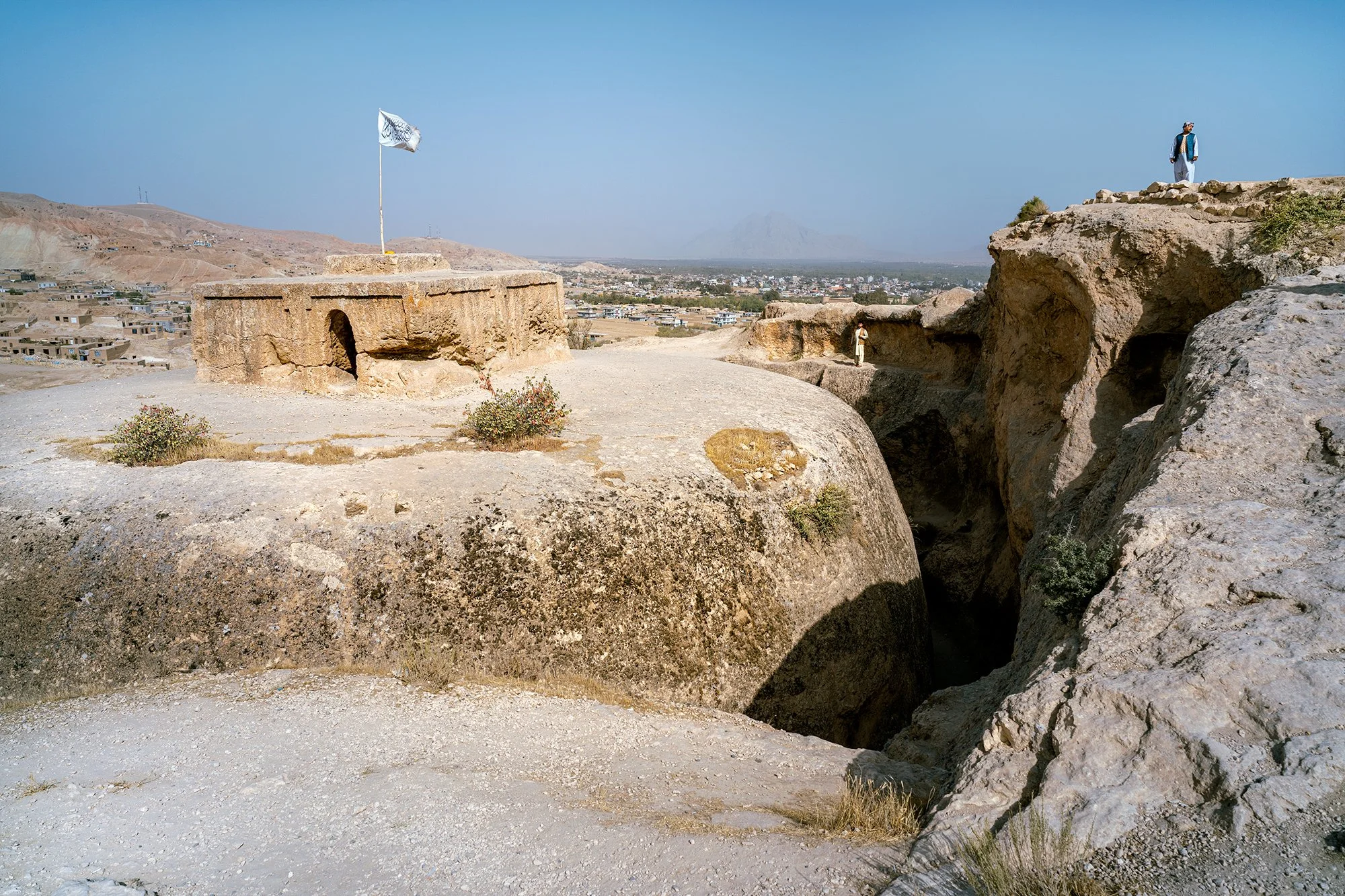
The Taliban flag flies over the historic site of Takht-e Rostam, a Buddhist stupa carved into the rock that has survived centuries of history. The contemporary power proclaims itself the guardian of a past that precedes it, imposing its authority over it and erasing some of its religious traditions.
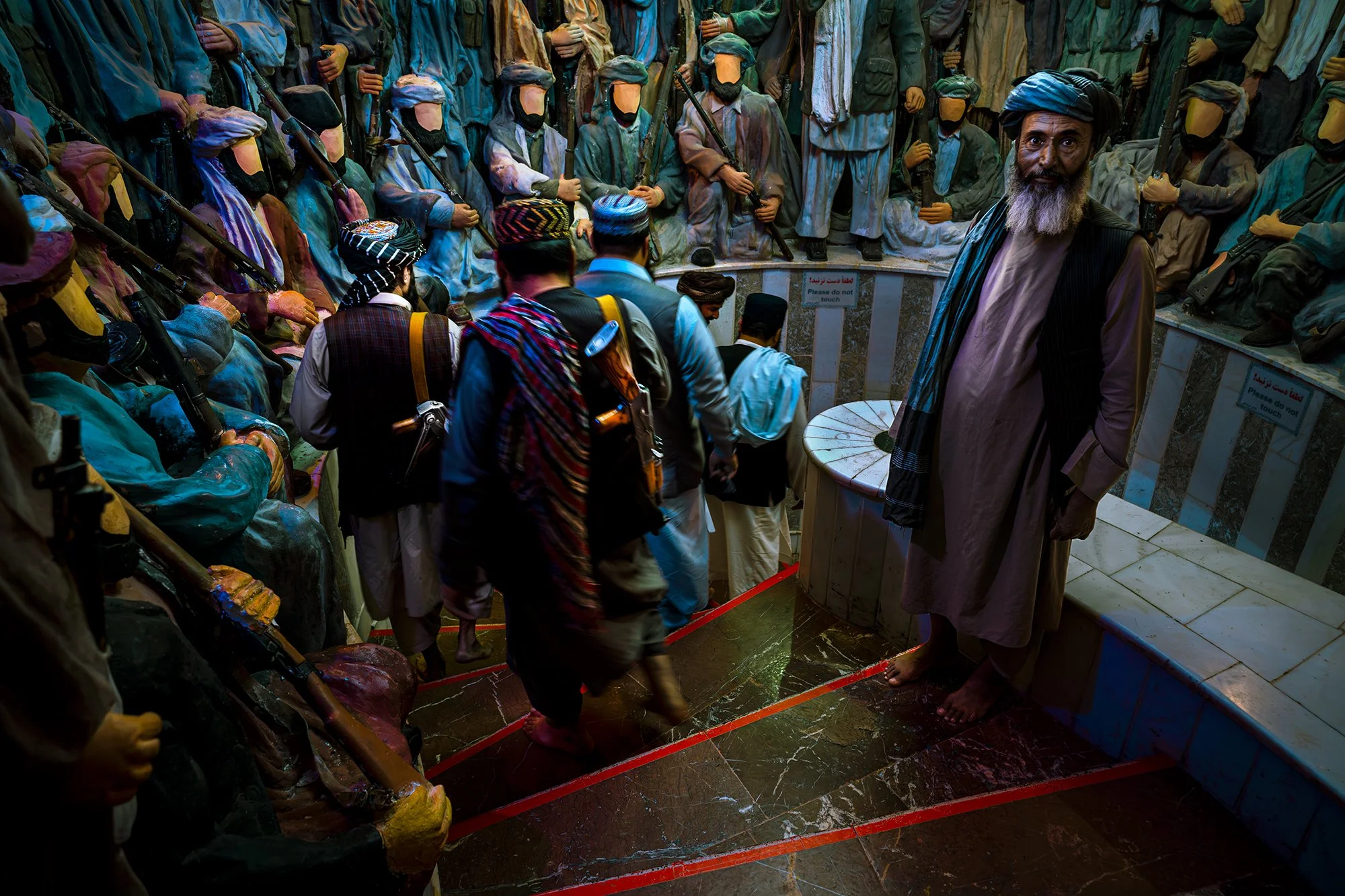
A former mujahideen, now a museum guard, lets armed Taliban pass. Around him, statues stand with the erased faces of the mujahideen who liberated the country from the invasion. The museum becomes a conflict between a denied past authority and a present power that imposes its own version of history.
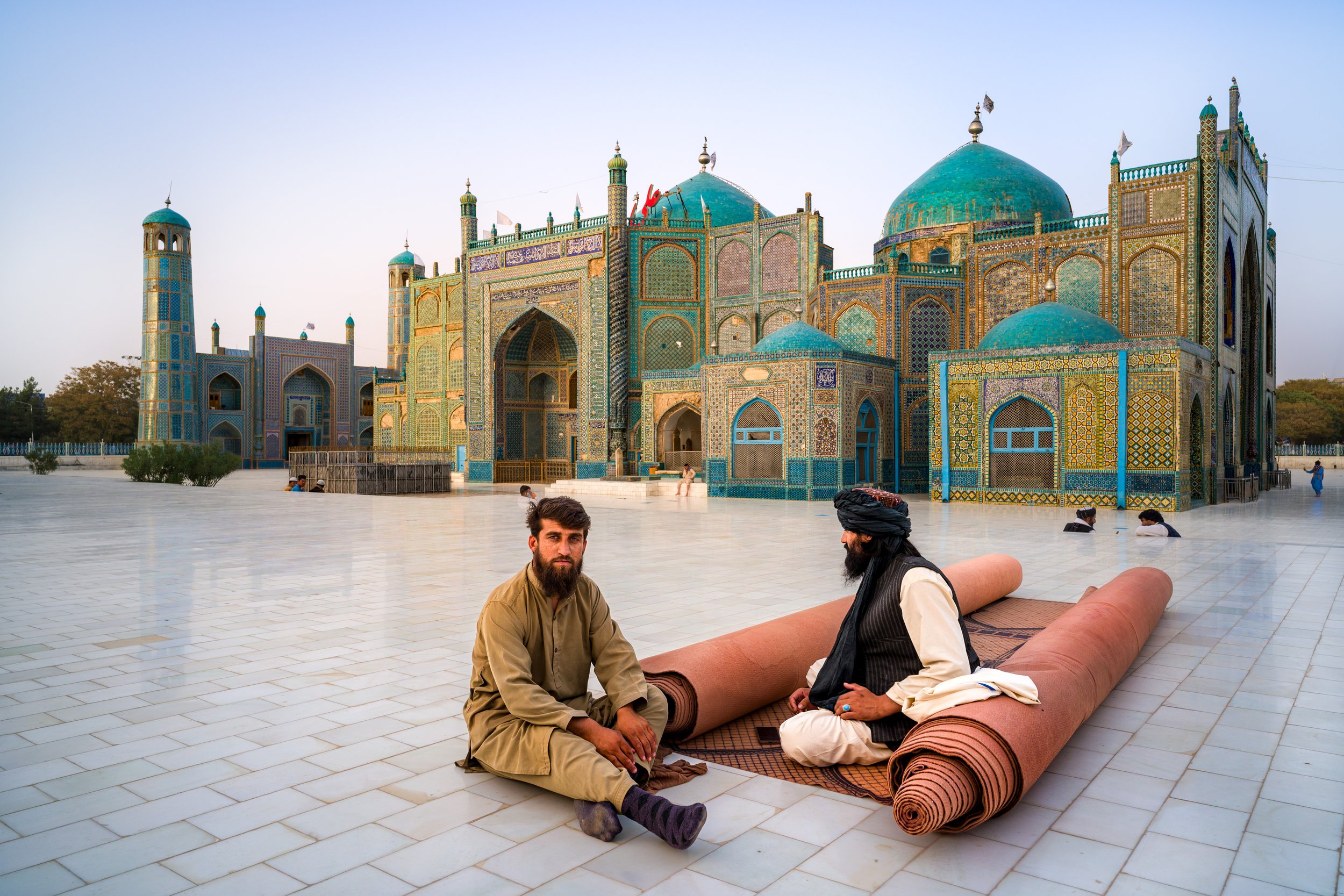
As sunset envelops the magnificent Blue Mosque of Mazar-i Sharif, a man pauses to converse with a local Taliban member, intent on praying on a rug. As I pass by them, our eyes meet, time slows, a nod of greeting begins, and a new but brief conversation begins, where our differences are the spark that intrigues us, but the language barrier is still too great to communicate.
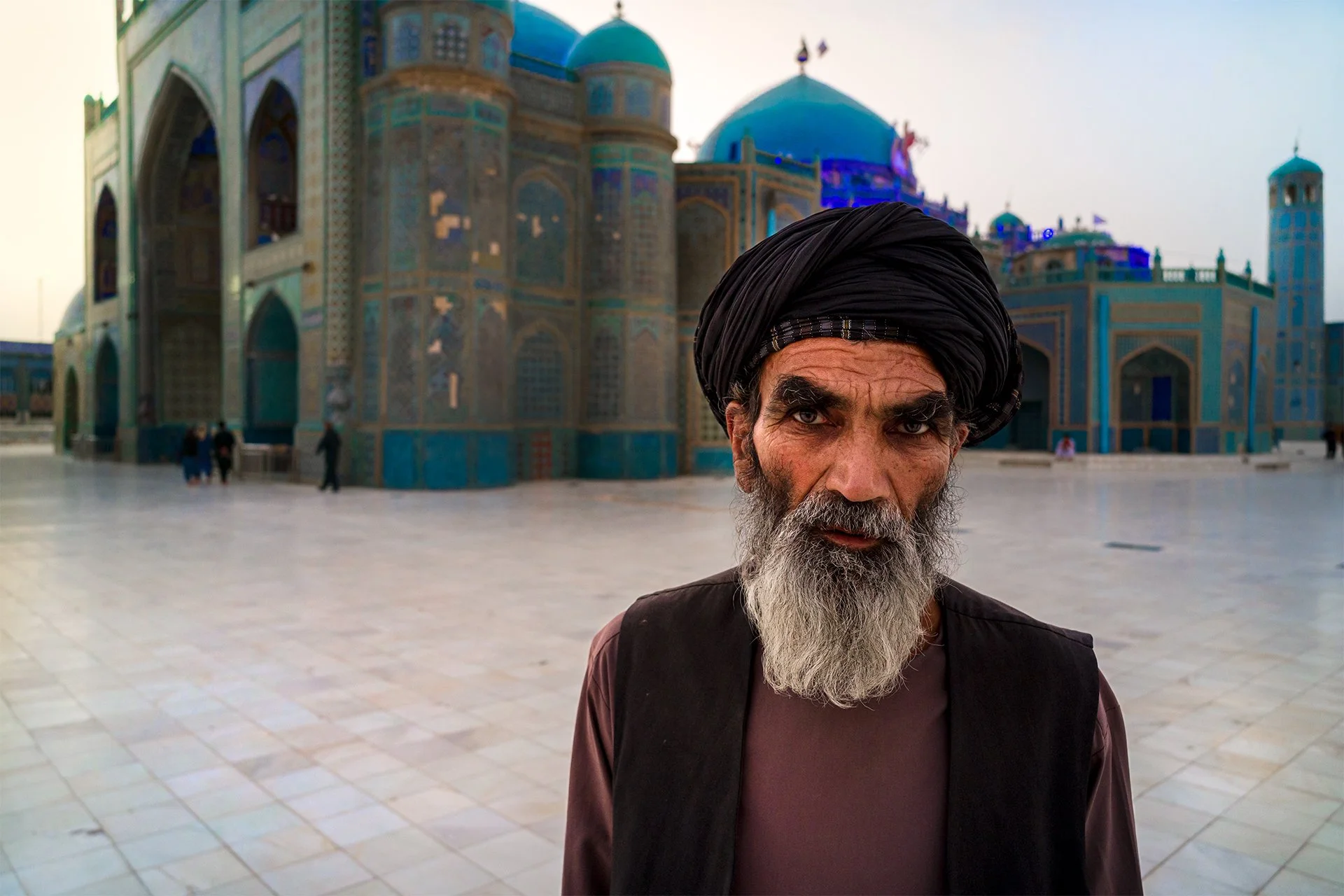
At sunset, in front of the majestic Blue Mosque in Mazar-i-Sharif, a Taliban approaches to question my presence in the sacred courtyard. His penetrating gaze embodies faith and authority, the dual nature of one who believes and commands, protects and controls.
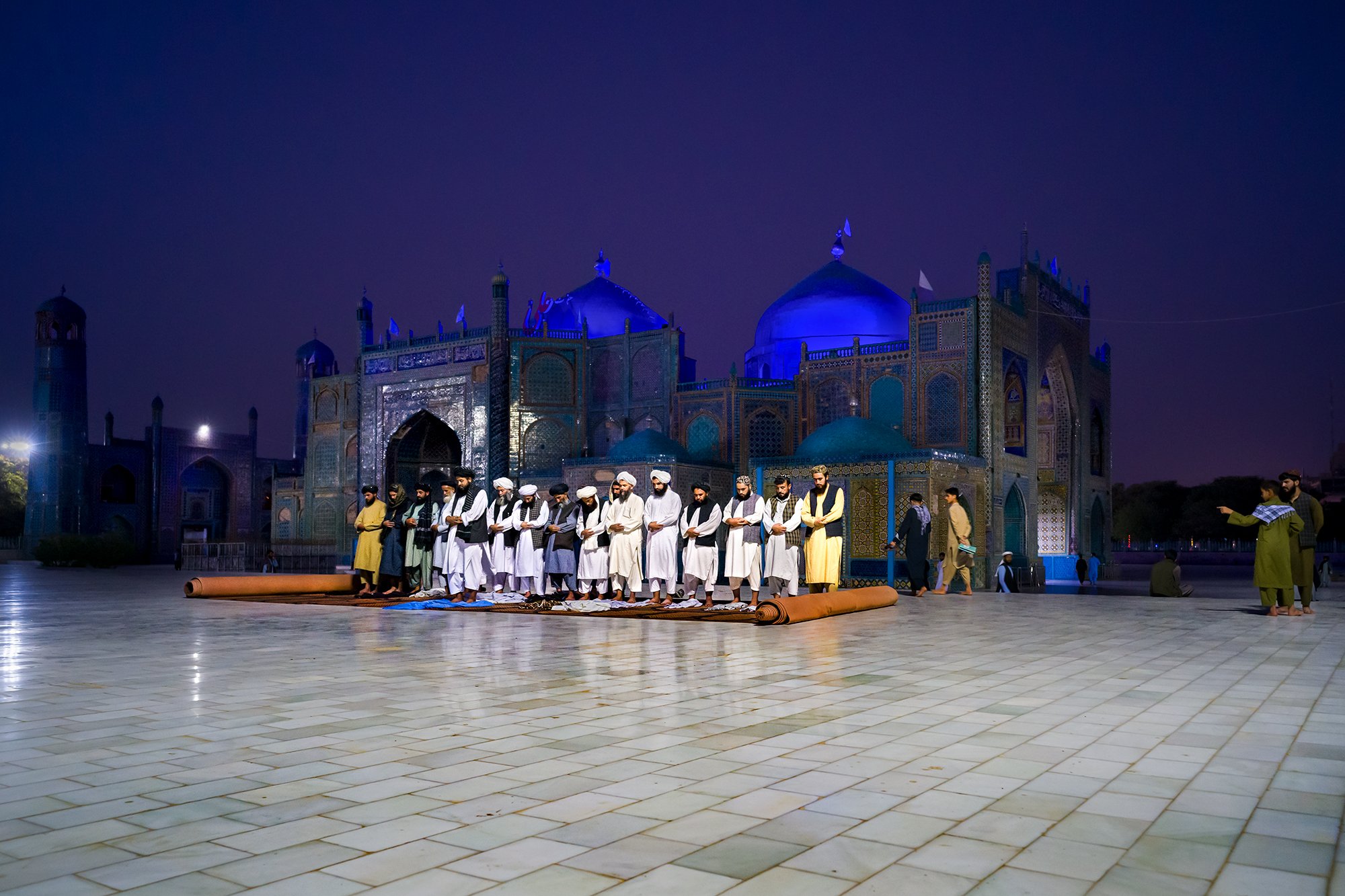
In front of the Blue Mosque in Mazar-i-Sharif, a group of Taliban gather to pray the Salat al-Maghrib, the sunset prayer. Their weapons are momentarily laid down, and the silence of faith envelops those who embody local authority, highlighting the fine line between power and devotion.